
Long knowledge! Take a look at these robots launched in 2015
Release time:
2016-01-14
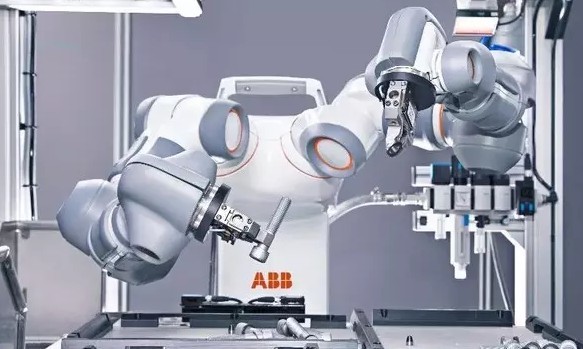
In the past, robots did most of the repetitive mechanical work, such as assembling and shaving noodles, but last year robots also learned more skills, such as cooking, caring for patients, selling things, and writing news.
In 2015, people were smart.Can and robot attitude is very interesting. While people worry that these fast-developing technologies will replace human labor and exceed their own management limits, they have "honestly" researched and practiced smarter robots and artificial intelligence technologies. Tesla CEO elon musk did not know how many times he shouted "I am afraid of artificial intelligence" on the Internet and set up a new company OpenAI, which specializes in artificial intelligence, to prevent artificial intelligence from going astray. On the other hand, Tesla, Google and many car manufacturers including Audi are in full swing announcing their own self-driving technology progress, while Amazon's warehouse has 30000 kiva logistics robots, it already saves Amazon $4 to $0.9 billion a year.
But in the midst of this concern and technological advancement, how much progress did robots make in 2015?
Artificial Intelligence: Not Smarter than Humans, But Increasingly Useful
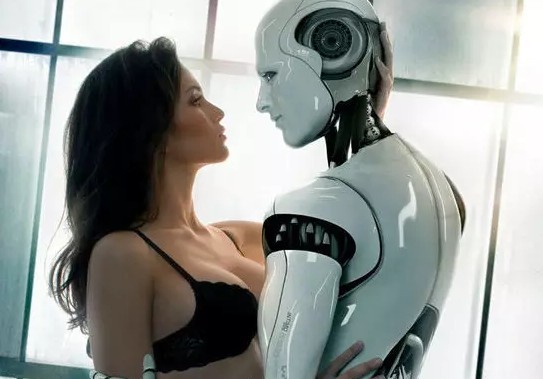
Artificial intelligence, mainly represented by natural language processing, computer vision and machine learning technology, has learned self-learning in the past year. Machines can not only share data, but also make progress together with the improvement of deep learning technology. Once a machine learns a certain skill, it Kowey synchronized to all machines.
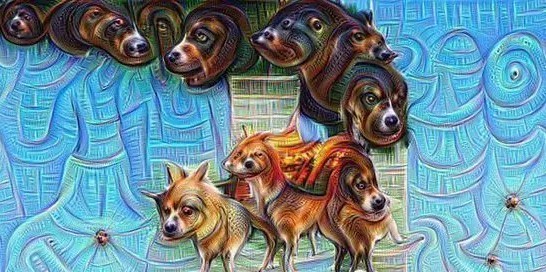
In an interview with the Guardian, Geoff Hinton, now a professor of deep learning at Google, mentioned that Google is developing a new set of algorithms that allow computers to think like humans, with "common sense" and "thinking". The algorithm, called Thought Vectors, digitizes language and encodes human "thinking" into a sequence of numbers. Google also opened up Inceptionism technology in 2015. This was originally to understand how artificial neural networks work and what content each layer of neural networks learned through image recognition and synthesis. However, the various magic pictures produced through this technology have attracted the attention of many programmers and artists. This is the effect of the photos of the day of the 911 after Deep Dream processing.
IBM, which also has strong data analysis capabilities, has also made progress in image recognition. They announced a cooperation with new york Sloan-Kettering Cancer Treatment Center (Memorial Sloan Kettering), which will apply image recognition technology and machine learning system to skin cancer screening. At present, this technology can improve the diagnostic accuracy rate to 95%, and the cooperation with new york Cancer Center is the first step towards clinical use of this technology.
In addition, the availability of voice assistants on mobile phones is much greater than that of the previous two years. Last year, Apple recruited at least 86 engineers with machine learning expertise to help iOS systems and voice assistant Siri talk. However, Xiao Bing, a chat robot launched by Microsoft in China, finally spoke up. People from Microsoft Research Institute found the dubbing robot, which was originally only active on Weibo, to finally return to WeChat and have voice conversations with users. In addition, based on the various data collected, Xiao Bing is an experimental channel for Microsoft to develop new technologies. Another Facebook, in August they released a semi-artificial artificial intelligence assistant M. In addition to the semantic analysis of text by artificial intelligence, M also has a real team to train and supervise it. Through these staff with a customer service background, it can make more subjective and humane judgments.
Autonomous driving: the future is not far away
Google, which has been studying unmanned vehicles for many years, released a report on unmanned vehicles in May last year. In six years, Google unmanned vehicles were involved in 11 small accidents (minor losses and no casualties), none of which were caused by unmanned vehicles. Google has also published a patent for unmanned vehicles to identify pedestrians. It displays information above the hood and on the front doors on both sides according to road conditions and estimated pedestrian crossing paths and passing times. Like a "safe pass" or a stop sign. Through an external speaker, the unmanned vehicle is also accompanied by voice prompts.
Similarly, electric vehicle manufacturer Tesla released the 7.0 system in October, which also provides some automatic driving functions, including the Autopilot of automatic driving, which can realize automatic lane keeping, automatic lane change, automatic parking, departure and side collision warning of vehicles. In addition, Baidu's unmanned car also opened on Beijing's Fifth Ring Road last month, and said it would achieve mass production within five years. No matter five years later, Google or Baidu, or the car manufacturer's unmanned car will drive on the road first, at least this future is not far away.
What jobs have robots replaced?
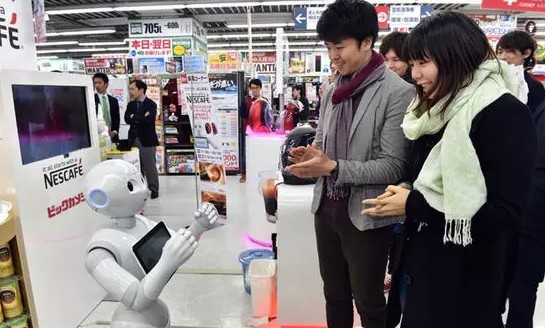
In the past, robots did most of the repetitive mechanical work, such as assembling and shaving noodles, but last year robots also learned more skills, such as cooking, caring for patients, selling things, and writing news. A German robot called PR2 learned to fry pancakes and make pizza WikiHow the guide website. In Japan, Pepper, an emotional robot developed by Softbank, Alibaba and Foxconn, has launched an enterprise version. According to reports, the enterprise version of Pepper will preset a series of programs to allow Pepper to go to work with a full body of work skills, such as greeting people nearby, making questionnaires or planning books, displaying goods or images, receiving guests, registering visitors, etc. Pepper also sells appliances at Yamada Denki stores and works as a bank teller at Mizuho Bank, one of Japan's three largest banks.
Finally, there is a robot that grabs jobs with reporters, called WordSmith artificial intelligence. In May last year, American Public Broadcasting specially recruited Scott Horsley, a current White House reporter and former business reporter, to have a news-writing duel with this artificial intelligence. The competition was to write a short financial news. As a result, WordSmith completed the task in only two minutes and Scott spent more than seven minutes.
Share

Address
No. 830, East Jinhai Avenue, Sanzao Town, Jinwan District, Zhuhai City, Guangdong Province
Tiktok
Video Number
WeChat Public Number
Mobile phone end
对不起,当前栏目暂无内容
您可以查看其他栏目
Sorry, there is currently no content in the current column
You can check other sections
营业执照
Business License